Review of What We Carry by Cameron Watts (Tseshaht)
What We Carry | Directed by Jessie Anthony Heralds (Onondaga)
CANADA | 2025 | 88M | ENGLISH
Onondaga Filmmaker Jessie Anthony Heralds an era of Indigenous Cinema where care is a central pillar of Indigenous filmmaking. There was easily a world where What We Carry ends up like another Heritage Canada video that brushes over the challenging dialogue. What We Carry refuses the easy road. Instead the film embraces its mission to better understand and connect with one another as a sacred responsibility. The Direction Jessie takes What We Carry leads to some of the most meaningful efforts witnessed to repair the interpersonal relationships between Canadians and Indigenous people.
It’s vital to make sure Indigenous films are being made in a good way, not just to simply take care of cast and crew, but to also keep doors open and keep community involved. In the past, productions have knocked on the doors of Indigenous people and asked us to tell our stories, only to take off without giving anything in return. Story sovereignty grows increasingly important in a time where anti-Indigenous sentiment is on the rise.
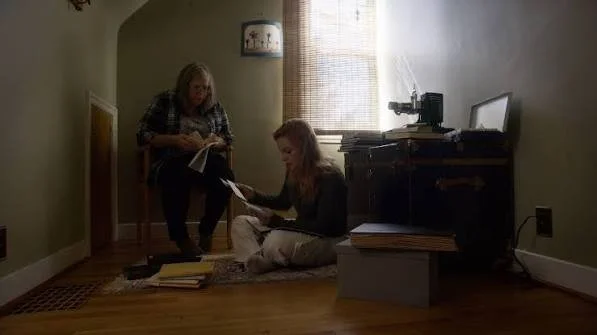
Bracken and her mother Katrinka gracefully stumble their way though the community of Wabasca with a willingness to listen and an openness to learn. They show us what a world looks like when Canadians might not know enough to change things, but they know that they can no longer stand it. Doing something is better than doing nothing even if it feels small, the results compound and little waves ripple into a lot. Before you know it, the tides will shift and we will look back to see how far we’ve come.
The film serves as evidence that Canadians can put their phantom heaps of shame, guilt, and grief, out on the table, have difficult conversations with healthy conflict resolution and begin to decipher what emotions belong to them from what has been saddled onto them by a system of deceit and destruction, resulting in both sides of the fence coming out feeling lighter. This is witnessed first hand by the audience when Katrinka is able to finally process a lifetime of bottled up grief in regards to her missing adopted cousin. For Kat and Willow, this moment becomes a real eye opener, coming to the realization that non-Indigenous people can and do carry the same pain we have for our loved ones that have been affected by these schools.
Kat and Willow are an excellent duo throughout the story. Their role requires them to facilitate a delicate balance of how much access do they allow these visitors to their community, and it is a significant responsibility to know when to call things off before these exchanges with survivors of residential school become more damaging than helpful. What We Carry undoubtedly provides the audience with much to reflect on, but doesn’t leave us lost. The film closes with a call to action for everyone who feels they’re ready to find connection, to better understand one another, and build our futures together.
Review by Cameron Watts (Tseshaht)
