Review of Mãrama by Sonja Hammer (Ngāti Kahungunu, Kuki Airani)
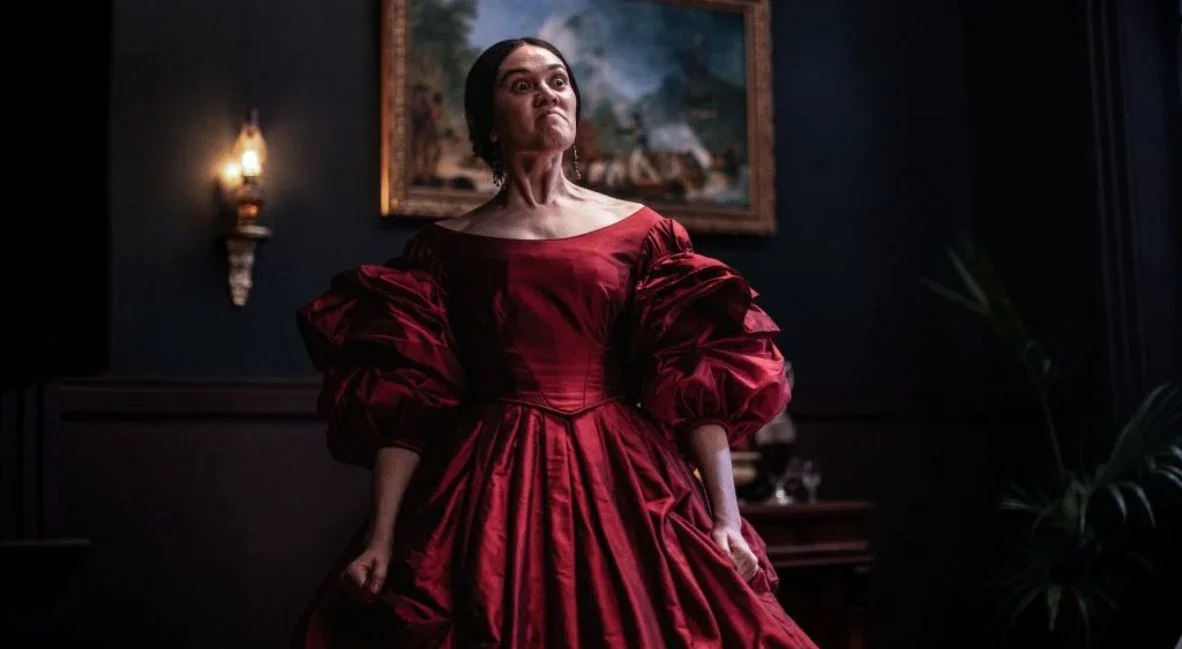
Mārama | Directed by Taratoa Stappard (Ngāti Raukawa, Ngāti Toa, Ngāti Tūwharetoa)
AOTEAROA NEW ZEALAND | 2025 | 89M | ENGLISH, MĀORI
Mary Stevens arrives in England on a quest to find out who she really is, her paternity, her racial identity. Seeking knowledge of such things in the 1850s by a woman is hard, but to be a colonised Maori woman on top of that is even more daunting. The actress who portrays her, Ariana Osborne relates in an interview I had with her at this year's imagineNATIVE: “In the general experience of Maori carrying the trauma of our history, all that stuff that happened with colonization”.
Mary’s investigations lead her to Nathaniel Cole’s estate in England and she is soon ensconced in his family as governess to his granddaughter Anne, whose mother was Maori, having died, and whose paternity is Nathaniel's emotionally anaemic son. Like any good gothic tale, there are twists and turns, and villains. Mary discovers that Nathaniel is a covetous manipulator, and young Anna’s mother was her twin sister. In one scene she notices that Anna has an almost identical birthmark to her a “shooting star”, a reminder how melanin marks were a way to identify a person of mixed blood, adopted Maori babies in Aotearoa would be checked for melanin marks at the base of their spines. Anna shows Mary a secret garden with a Maori whare, reminiscent of the true story of Hinemihi o te Ao Tawhito in the 1800s, after surviving the Tarawera eruption, having sheltered her people from the magma and ash, she was dismantled, shipped to England and reassembled like a dolls house in a colonizers garden, where she resides to this day. The sense of dislocation for Mary on seeing a meeting house in a foreign space causes her to faint. The structure is another female character in the story, a container of secrets.
A birthday party at the Cole’s residence one evening takes a dramatic turn when Mary is confronted by a pakeha performing a haka. Explaining how Mary feels Ariana Osborne says : “I’ve just witnessed this horrific cultural appropriation, mockery, (of a haka), I’m genuinely so repulsed” and with “the cultural appropriation or bastardization there was a pocket of rage in me that also existed in Marama”. In an emotional response to staged racism and speciesism, Mary explodes with a haka, a reaction of righteousness to the outrageous denigration of her culture. It’s an act so breathtaking, the actress describing the challenges of wearing a 27 meter blood red silk dress while: “doing a haka requires so much breath and actually there’s not a lot of space to get a deep breath, cos it’s so tight around your chest”. Mary’s ferocity of resistance is powerful. At this moment she is becoming Marama, reclaiming her birth name.
Channelling the mana of her female ancestors, confronting the pakeha Nathaniel Cole, Marama takes fate into her own hands. ‘Kia whakatomuri te haere whakamua’- I walk backwards into the future with my eyes fixed on my past. A bloodcurdling sanctification,Marama is a heroic, anti-colonial, Maori edition to the genre of gothic horror.
Review by Sonja Hammer (Ngāti Kahungunu, Kuki Airani)
