Review of Blood Lines by Radio-JusSunná / Sunna Nousuniemi (Sami)
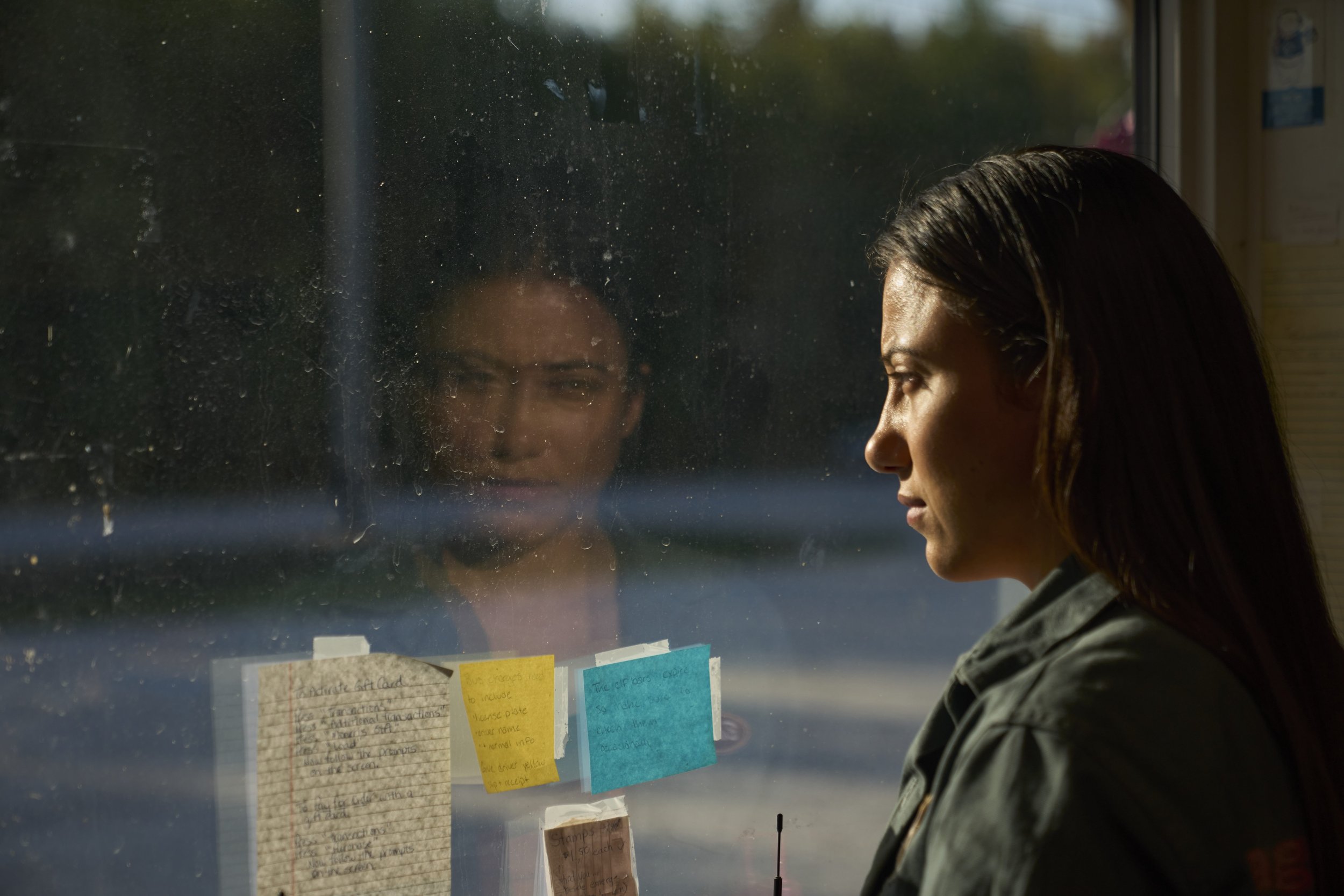
Blood Lines | Directed by Gail Maurice (Métis)
CANADA | 2025 | 89M | ENGLISH, MISCHIF
It’s not just like any other Saturday night in the city of Tkaron:to as I, among many others, am getting into the cinema to watch Gail Maurice’s groundbreaking second feature fiction Blood Lines. With two friends of mine, carrying popcorn, fizzy drinks and heart full of queer joy, we find our seats. It’s my second time watching the film and this time I’m excited to immerse myself in the cinematic language of the film.
Blood Lines portrays a sapphic, heightened reality rooted in deep love for the Métis culture, language and identity. The film begins with the main character Beatrice, played by Dana Solomon, driving through her village with a soft indie tune playing in the background. The audience is introduced to the place with fleeting summery landscapes bathed in golden light, glimmering waters and people warmly greeting her as she drives past them. It becomes clear that Beatrice is beloved by her community and everyone knows her - she has a strong belonging. On her way, she meets an elder, Monique, who’s watering her little garden. “Working on any good stories?”, Monique greets Beatrice in the Michif language and encourages her to keep working on stories for the local newspaper. With tender encounters and charming milieu, the film plot starts to unfold as a fairytale-like, intimate Métis drama.
However, things start getting tricky when Beatrice’s estranged mother Léonore, played by the director, Gail Maurice, shows up in the village after years of no contact with Beatrice. While having to navigate difficult emotions due to the sudden appearance of her mother, there’s a silver lining too, as simultaneously Beatrice is introduced to a mysterious femme, Chanie (played by Derica Lafrance), who appears wandering alone in the village. What begins as Beatrice and Chanie bonding over the attempt of tracing Chanie’s biological family, rapidly blossoms into a heartfelt lesbian romance.
(PSA: the following part of the text consists of detailed spoilers.)
The cinematic language in the film centers rematriation, told within queer lens. The reoccurring visual element in the film is body of water, from the very beginning to the very end, and it serves as a subtle plot device linked to motherhood, belonging and sexuality. It starts with the elder Monique tending the little garden with water as gentle gesture of care taking and world-building. Fast forward - Beatrice and Chanie end up in a conflict after Chanie witnesses Beatrice ignoring Léonore coughing and almost choking up of thirst outside the gas station where Beatrice works. Chanie brings water to Léonore and leaves the gas station disappointed in Beatrice’s lack of care for Léonore.
One of the key scenes featuring water is when Beatrice and Chanie go to a river, the soulscape of Beatrice’s childhood, and Beatrice disappears in the river. Chanie steps in the river to look for Beatrice, who is actually just teasingly hiding underwater and emerges back to the surface to kiss Chanie. The sunbeams softly flicker, even the river seems to flow more effortlessly of enchantment and desire as Beatrice and Chanie are making love on the land, surrounded by wild flowers while the sun is setting. Some days later, Beatrice and Chanie get back to the river and sit next to each other, their feet in the water while reading the 'request for no contact' letter which Chanie has received from her biological family. What they don't know yet is that they were both brought into existence from the same water, carrying the same blood line.
Blood Lines is an extraordinary film which offers so much to appreciate and to unpack all at once. Maurice masterfully combines the water as a metaphor with the elevated storyworld in a restorative way to bypass stigma and to approach fractured family ties with compassion. Fused with auntie humor and the sweet melodies of Dolly Parton, this film is written from a place where love and queerness are already the default, putting the emphasis on the deeper healing of relationships. In this way, Maurice’s work is truly arching towards creating a new language that challenges the status quo, asking us to embrace the tension as a gateway to more profound self-acceptance.
Review by Radio-JusSunná / Sunna Nousuniemi (Sámi)
